

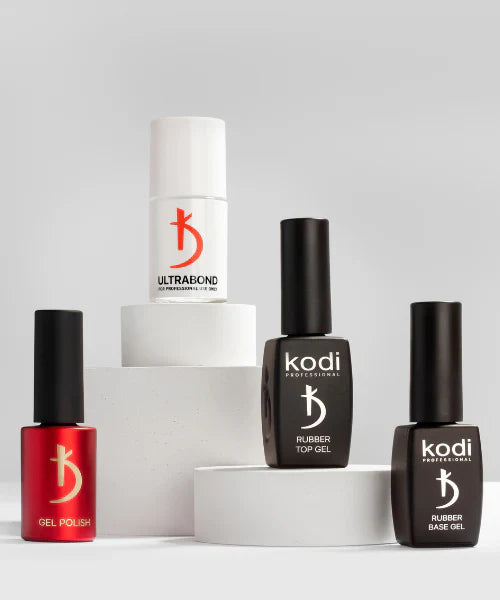
Both acid and acid-free primers are used in nail modeling procedures to enhance the adhesion between the natural nail surface and the sculpting material. But what sets them apart? And how should each be applied correctly?
Key Difference: Composition
The main difference between acid and acid-free primers lies in their chemical composition. Acid primers contain methacrylic acid, which gently lifts the scales of the nail plate, creating a slightly rough surface that improves adhesion for any modeling material. Acid-free primers, though free of methacrylic acid, also create a mildly textured surface but are often preferred for gel extensions.
Let’s explore the unique properties and usage guidelines for each type.
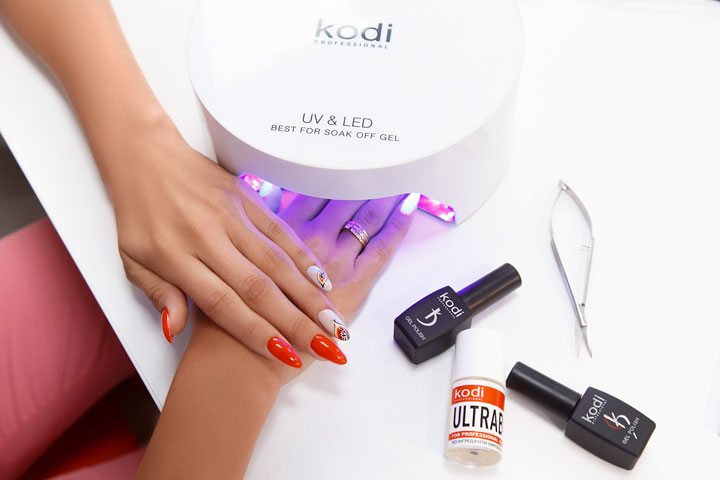
What Is an Acid-Free Primer?
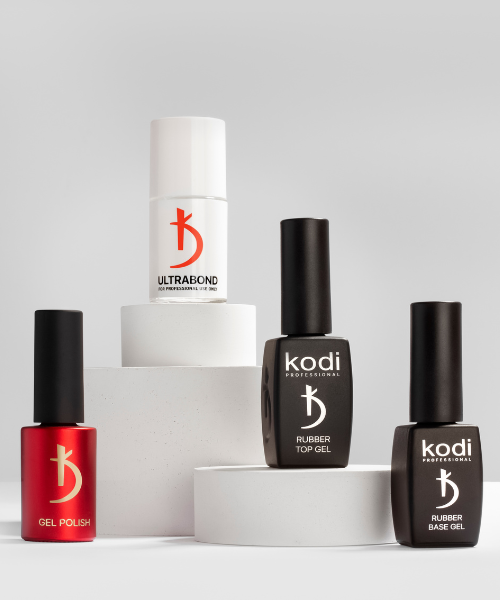
An acid-free primer, also called an ultrabond, is a primer that does not contain methacrylic acid. Instead, it uses ethyl acetate, a safe chemical solvent that doesn’t trigger allergies or damage the nail plate.
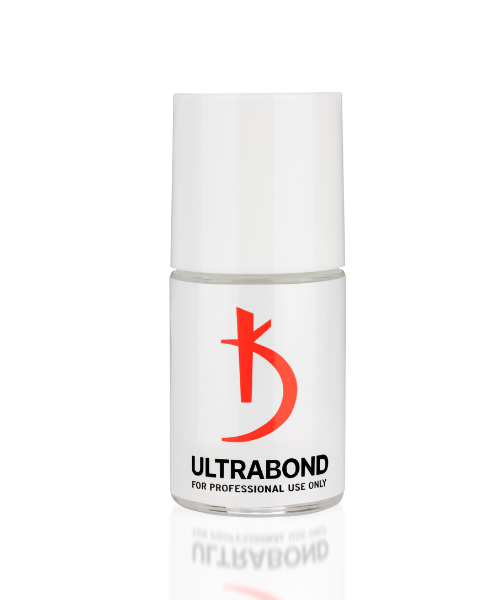
Characteristics of Acid-Free Primer:
-
Does not alter the pH level of the nail and doesn’t cause nail separation or peeling.
-
Does not discolor the base coat when in contact with it.
-
Accelerates the modeling process due to quick drying.
-
Leaves no visible residue once dry. The nail feels slightly rough to the touch.
This type of primer is considered universal and is ideal for weakened or brittle nails.
What Is an Acid Primer?
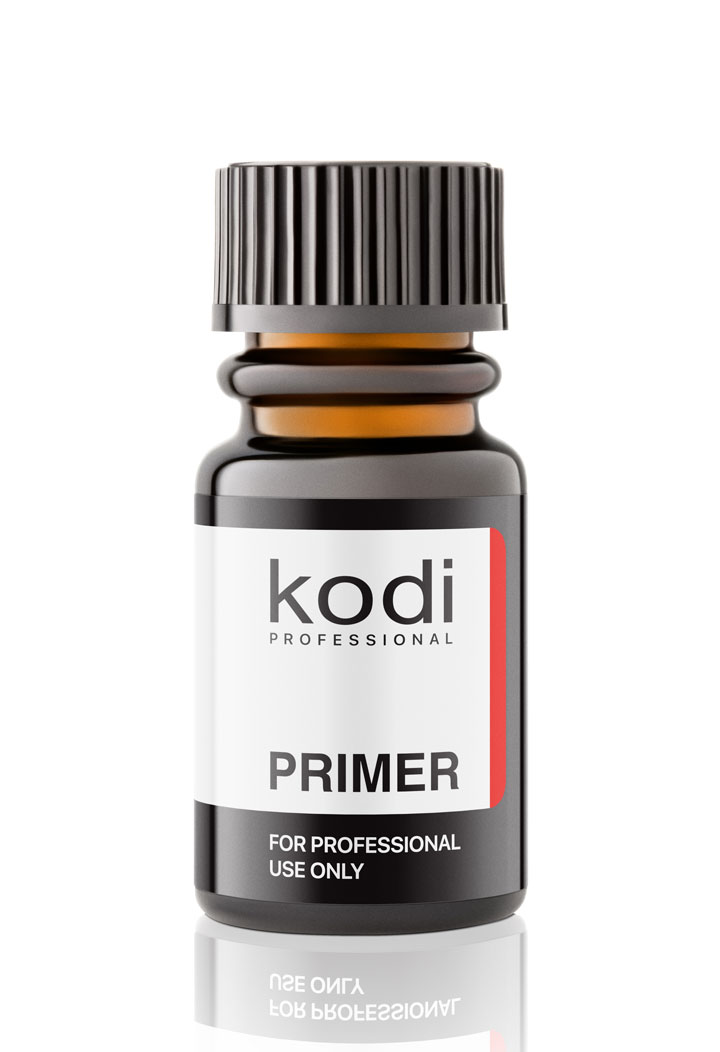
Acid primers contain methacrylic acid, a toxic substance in its pure form. However, in nail products, it is diluted and safe for use on nails. It opens the nail plate scales to ensure strong bonding between acrylic materials and natural nails.
Characteristics of Acid Primer:
-
Provides a reliable bond, especially for acrylic systems.
-
Ideal for clients with sweaty hands, as it offers excellent adhesion.
-
Leaves a white residue on the nail when dry, indicating it's ready for the next step.
-
Should be used in well-ventilated areas due to its strong odor.
-
Must be applied in a thin layer to avoid over-softening the nail plate.
Which Primer Is Better?
To determine whether acid or acid-free primer is better, let’s compare their similarities and differences:
| Feature | Acid Primer | Acid-Free Primer |
|---|---|---|
| Usage | Suitable for acrylic, gel, or shellac applications | Also used for acrylic, gel, and shellac |
| Nail Type | Can be used on damaged or problematic nails | Best for brittle and sensitive nails |
| Application | Easy to apply and quick-drying | Same application method as acid version |
| Composition | Contains methacrylic acid | Contains ethyl acetate only |
| Aggressiveness | Slightly more aggressive; use sparingly | Considered gentler on nails |
| Odor | Strong, pungent smell | Low or no smell |
Both types remove moisture and oils from the nail surface, making it an inhospitable environment for bacteria and fungi. Nail modeling without using either type of primer is not recommended.
How to Apply Acid Primer
Even though acid primers are safe in small doses, they should still be applied with care:
-
Open the bottle and dip the brush lightly into the primer.
-
Wipe off excess product on the neck of the bottle.
-
Touch the center of the nail plate and allow the primer to spread evenly.
-
Use only a small amount, ensuring full nail coverage.
-
Let it dry completely before applying the base coat.
How to Apply Acid-Free Primer
Application is similar to that of acid primers:
-
Unscrew the cap and dip the brush into the bottle.
-
Remove excess product if needed.
-
Apply to the center of the nail and allow it to spread.
-
Ensure even coverage.
-
If there is too much product, dab gently with a lint-free wipe.
-
Let it dry fully before proceeding with the base coat and sculpting material.
Which One Should You Choose?
If you're doing nails at home, choose based on your nail condition (brittle, oily, dry, etc.). A professional nail technician should have both types on hand to choose the best option based on the client's nail type.
You can purchase both acid and acid-free primers from the Kodi Professional product catalog — a trusted brand in professional nail modeling and nail art supplies.
Important Note: While both primers are safe for nail application, they still contain active ingredients that release vapors. It's highly recommended to wear a mask or respirator when working with them and to always allow the primer to dry completely before continuing the nail modeling process.


